The coenzyme behind cellular energy
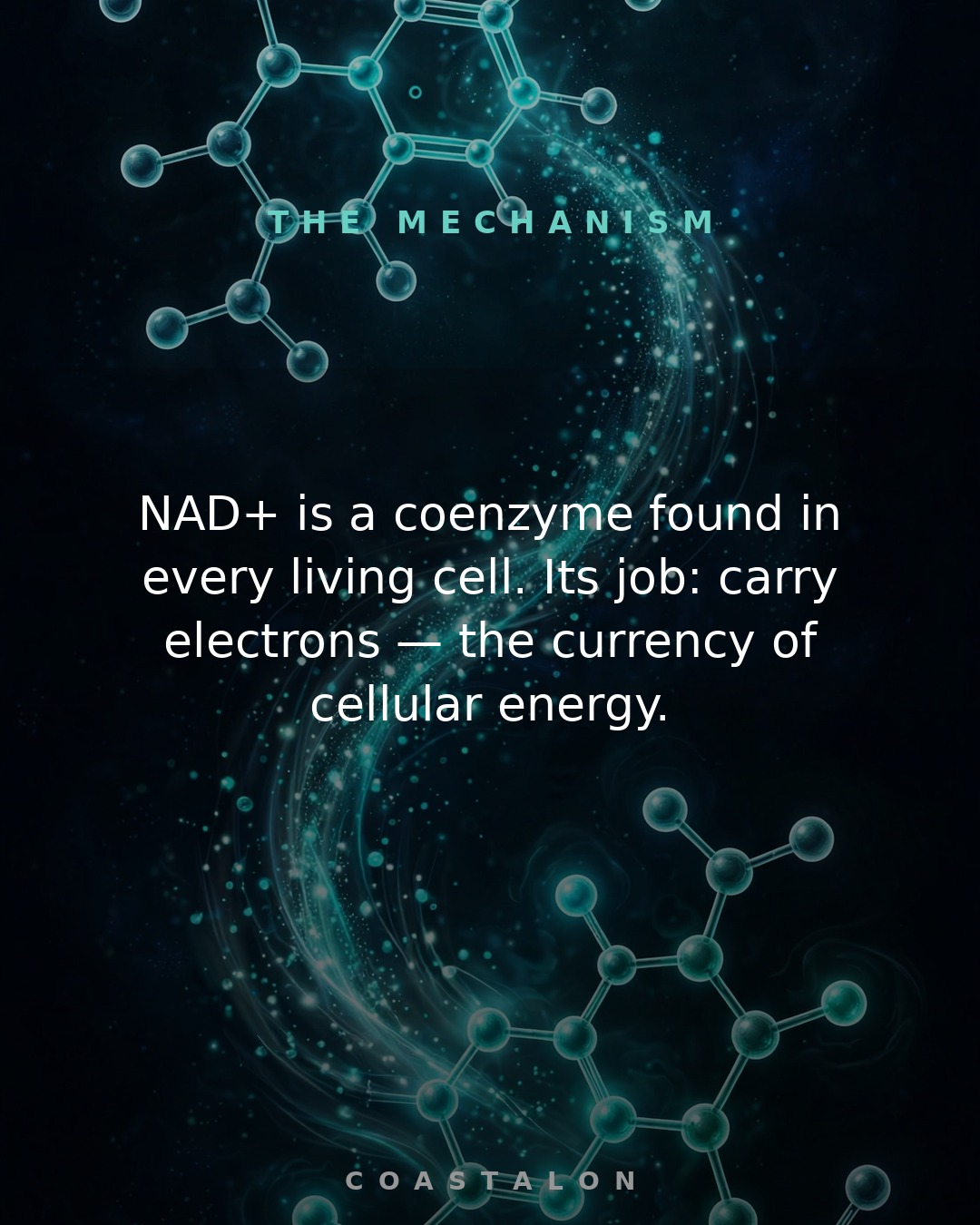
NAD+ (nicotinamide adenine dinucleotide) is a coenzyme present in every living cell. It works as a shuttle: it picks up electrons from one reaction and delivers them to another, powering the chemical work that keeps a cell alive.
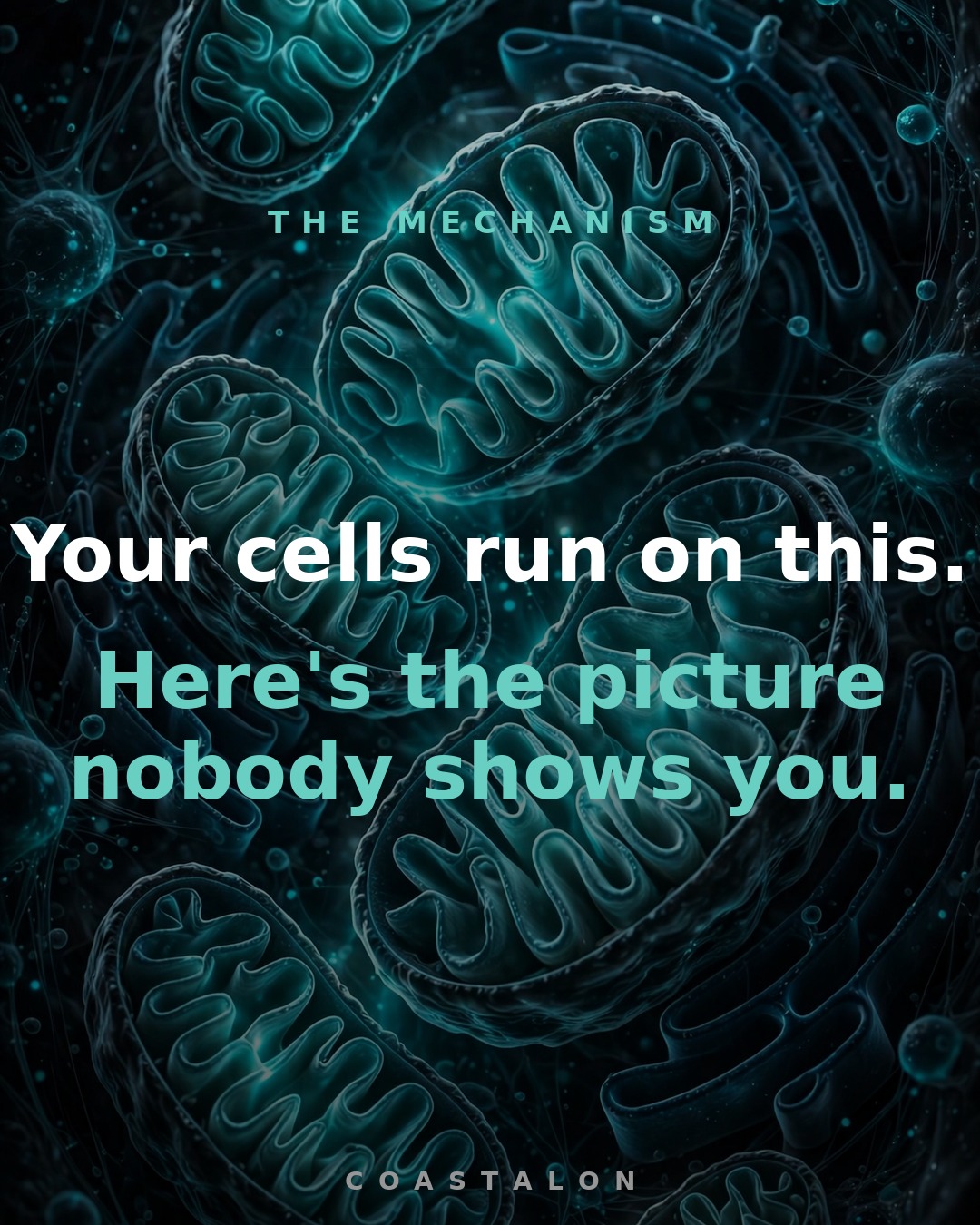
Inside the mitochondria — the cell’s energy compartments — NAD+ shuttles electrons down the transport chain. That flow powers ATP, the energy cells spend to do everything.
The NAD+ / NADH redox pair
NAD+ is not a peptide — it is a small coenzyme built from two nucleotides joined by their phosphate groups. It exists in two forms that cycle back and forth:
- NAD+ — the oxidized form, ready to accept electrons.
- NADH — the reduced form, carrying electrons to where they are needed.
That back-and-forth — NAD+ to NADH and back again — is the shuttle itself. Each cycle moves energy from fuel molecules into the electron transport chain.
From electrons to ATP, in three steps
- NAD+ picks up electrons. As nutrients are broken down, NAD+ accepts electrons and hydrogen, becoming NADH.
- NADH delivers them to the mitochondria. Inside the mitochondria, NADH feeds electrons into the transport chain.
- The flow powers ATP. As electrons move down the chain, the energy released drives the production of ATP — the molecule cells spend to do work.
Why researchers care
Researchers study NAD+ because levels decline with age in animal models — making it one of the most watched molecules in aging research. The decline is a reason the coenzyme appears in so much current work on cellular energy and metabolism.
That interest is research interest: the findings discussed here come from laboratory and animal studies, not from human outcome trials.
Molecular specifications
| Amino Acid Sequence | N/A — NAD+ is a coenzyme, not a peptide |
|---|---|
| Molecular Weight | 663.4 g/mol |
| Molecular Formula | C₂₁H₂₇N₇O₁₄P₂ |
| CAS Number | 53-84-9 |
| Storage | −20°C long-term, 4°C short-term up to 2 weeks, protect from light |
Selected literature
The following peer-reviewed references informed this page. Citations are provided for scientific context only.
- Verdin E. (2015). NAD+ in aging, metabolism, and neurodegeneration. Science, 350(6265), 1208–1213.
- Rajman L, et al. (2018). Therapeutic potential of NAD-boosting molecules: the in vivo evidence. Cell Metabolism, 27(3), 529–547.
- Yoshino J, et al. (2018). NAD+ intermediates: the biology and therapeutic potential of NMN and NR. Cell Metabolism, 27(3), 513–528.
- Guarente L. (2013). Calorie restriction and sirtuins revisited. Genes & Development, 27(19), 2072–2085.
- Fouquerel E & Sobol RW. (2014). ARTD1 (PARP1) activation and NAD+ in DNA repair and cell death. DNA Repair, 23, 27–32.
Research Disclaimer
This product is intended strictly for laboratory research purposes only. It is not a drug, food, cosmetic, or dietary supplement and is not intended to diagnose, treat, cure, or prevent any disease. It is not for human or animal consumption. All information presented is derived from published scientific literature and is provided for educational reference only. By purchasing, the buyer affirms they are a qualified researcher or institution and assume full responsibility for the safe and lawful handling of this material.